
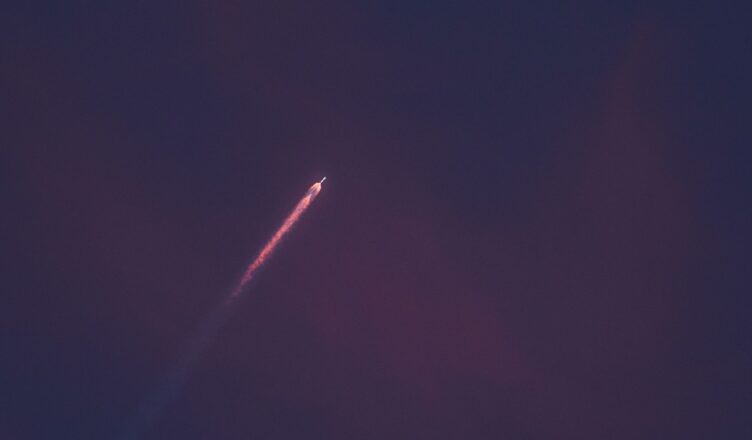
ISRO GSLV-F17 has successfully delivered EOS-05, marking a significant milestone for India’s space program with its first geosynchronous imaging satellite.
What is the significance of EOS-05?
The launch of the EOS-05 satellite aboard the ISRO GSLV-F17 marks a significant milestone for India’s space exploration capabilities. This satellite is heralded as the nation’s first geosynchronous imaging satellite, which holds immense potential for various applications.
One of the primary significances of EOS-05 is its ability to provide high-resolution imagery for a range of sectors, including:
- Agriculture: EOS-05 can monitor crop health, manage resources, and enhance agricultural productivity.
- Disaster Management: The satellite’s imaging capabilities can help in early detection of natural disasters and facilitate swift response strategies.
- Urban Planning: With its detailed mapping features, urban planners can make informed decisions regarding land use and infrastructure development.
- Environmental Monitoring: EOS-05 will assist in tracking changes in the environment, such as deforestation and pollution levels.
Furthermore, the satellite is equipped with advanced imaging technology that can capture data during both day and night. This capability significantly enhances the reliability and quality of data received, making it an invaluable tool for researchers and decision-makers.
In summary, the launch of EOS-05 via the ISRO GSLV-F17 not only elevates India’s position in the global space landscape but also empowers various sectors by providing critical data and insights.
How does GSLV-F17 operate?
The GSLV-F17, a critical launch vehicle developed by ISRO, operates using a combination of cutting-edge technology and intricate engineering. This launch vehicle is designed to place heavier payloads into geosynchronous orbits, making it essential for missions like the deployment of the EOS-05 satellite.
One of the key features of the GSLV-F17 is its three-stage launch process, which includes:
- Solid Rocket Booster: The first stage utilizes solid propellant to provide the initial thrust needed to escape Earth’s gravitational pull.
- Liquid Core Stage: Following the solid phase, the vehicle switches to a liquid fuel core, allowing for more controlled and efficient thrust as it ascends through the atmosphere.
- Upper Stage with Cryogenic Technology: The final stage employs cryogenic technology, which uses super-cooled liquid propellant, further enhancing the payload capacity and enabling precise orbital insertion.
During the launch of the GSLV-F17, these stages work in harmony to ensure that the EOS-05 satellite reaches its designated orbit seamlessly. The precise timing and execution of each stage are crucial, as any deviation can result in mission failure.
In conclusion, ISRO’s GSLV-F17 exemplifies the advancements in satellite launch capabilities, marking a significant milestone for India’s space endeavors.
The future of India’s satellite technology
The successful launch of the ISRO GSLV-F17 marks a pivotal moment for India’s satellite technology. As the nation continues to push the boundaries of space exploration, the advancements showcased in this mission promise a brighter future for various sectors.
One of the most significant developments is the enhancement in imaging capabilities offered by the EOS-05 satellite. This satellite is expected to revolutionize the way data is collected and analyzed, particularly in fields such as agriculture, disaster management, and urban planning. The improved accuracy and real-time monitoring capabilities will empower researchers and policymakers to make informed decisions based on reliable data.
In addition to the EOS-05, the GSLV-F17 mission represents a broader trend in the evolution of India’s space program. The Indian Space Research Organisation (ISRO) is increasingly focusing on developing indigenous technology that reduces dependency on foreign systems. This shift not only enhances national security but also contributes to the country’s self-reliance in technology.
Future projects will likely build upon the foundation laid by the GSLV-F17, with more ambitious missions on the horizon. As India aims to establish itself as a global leader in satellite launches, continuous innovation in satellite design and launch technology will be crucial.
Overall, the ISRO GSLV-F17 signifies not just a successful launch, but a step towards a more advanced and self-sufficient satellite technology landscape in India.
ISRO’s achievements in space exploration
The Indian Space Research Organisation (ISRO) has consistently demonstrated its prowess in space exploration through a series of groundbreaking achievements. Among these, the recent launch of the GSLV-F17 stands out as a testament to India’s growing capabilities in satellite technology. This mission successfully delivered EOS-05, marking a significant milestone in the nation’s quest for advanced imaging capabilities.
ISRO’s ability to develop and launch sophisticated satellites has made it a key player in the global space arena. The organization has accomplished several notable feats, including:
- Chandrayaan Missions: These missions to the Moon have provided valuable insights into lunar geology and water presence.
- Mangalyaan: The Mars Orbiter Mission made India the first Asian nation to reach Martian orbit and the first in the world to do so in its maiden attempt.
- NavIC: India’s regional satellite navigation system has enhanced precision in positioning and timing services across the region.
With the launch of the GSLV-F17, ISRO not only reinforces its reputation for reliability and innovation but also enhances the country’s capabilities in Earth observation. The satellite will play a crucial role in various applications, including agriculture, disaster management, and urban planning, showcasing the potential of India’s advanced satellite technology.
ISRO GSLV-F17 has demonstrated remarkable reliability and efficiency, further solidifying its place in the realm of satellite launches. Many experts believe that ISRO GSLV-F17 sets a new benchmark for future missions, showcasing India’s growing capabilities in space technology.
Photo by Dirk Schuneman on Pexels